

Benefits of Secure Online Shopping for Homeowners
Over sixty percent of American shoppers worry about online scams when searching for home accessories from the comfort of their apartments in Los Angeles and New York. If you value style and want your next statement lamp or cozy rug to arrive safely, security concerns can quickly overshadow the excitement of a good deal. This guide unpacks how reliable e-commerce platforms keep your finances and personal details protected, empowering you to shop with confidence and peace of mind.
Table of Contents
- Defining Secure Online Shopping for Homeowners
- Popular Security Types and Key Features
- Trusted Payments and Consumer Data Protection
- Fraud, Scams, and Buyer Protection Rights
- Risks, Costs, and Common Shopping Pitfalls
Key Takeaways
| Point | Details |
|---|---|
| Secure Online Shopping | Use HTTPS websites, trust reputable vendors, and monitor transactions to protect personal and financial information. |
| Robust Security Features | Implement multi-factor authentication and encryption to safeguard sensitive data during online transactions. |
| Awareness of Scams | Stay vigilant against phishing and counterfeit goods, researching sellers before purchase to avoid fraud. |
| Manage Personal Data | Limit personal information shared during transactions and shop only on secure networks to mitigate identity theft risk. |
Defining Secure Online Shopping for Homeowners
Secure online shopping represents a critical digital strategy for protecting financial transactions and personal information when purchasing goods through internet platforms. Modern homeowners increasingly rely on online shopping for convenience, making understanding digital security paramount.
At its core, secure online shopping involves multiple protective measures designed to safeguard consumer interests. Trusted websites utilize HTTPS encryption to create a secure communication channel between a shopper’s device and the online marketplace. This encryption prevents unauthorized individuals from intercepting sensitive data like credit card numbers, home addresses, and personal identification details during transmission.
Key components of secure online shopping include:
- Verifying website authenticity through secure lock icons
- Using encrypted payment gateways
- Purchasing from reputable vendors with transparent return policies
- Monitoring transaction histories
- Implementing robust password protection
Digital security protocols act as virtual guardians, creating multiple layers of protection around financial transactions. These systems validate seller credentials, encrypt personal information, and provide consumers with confidence when making online purchases.
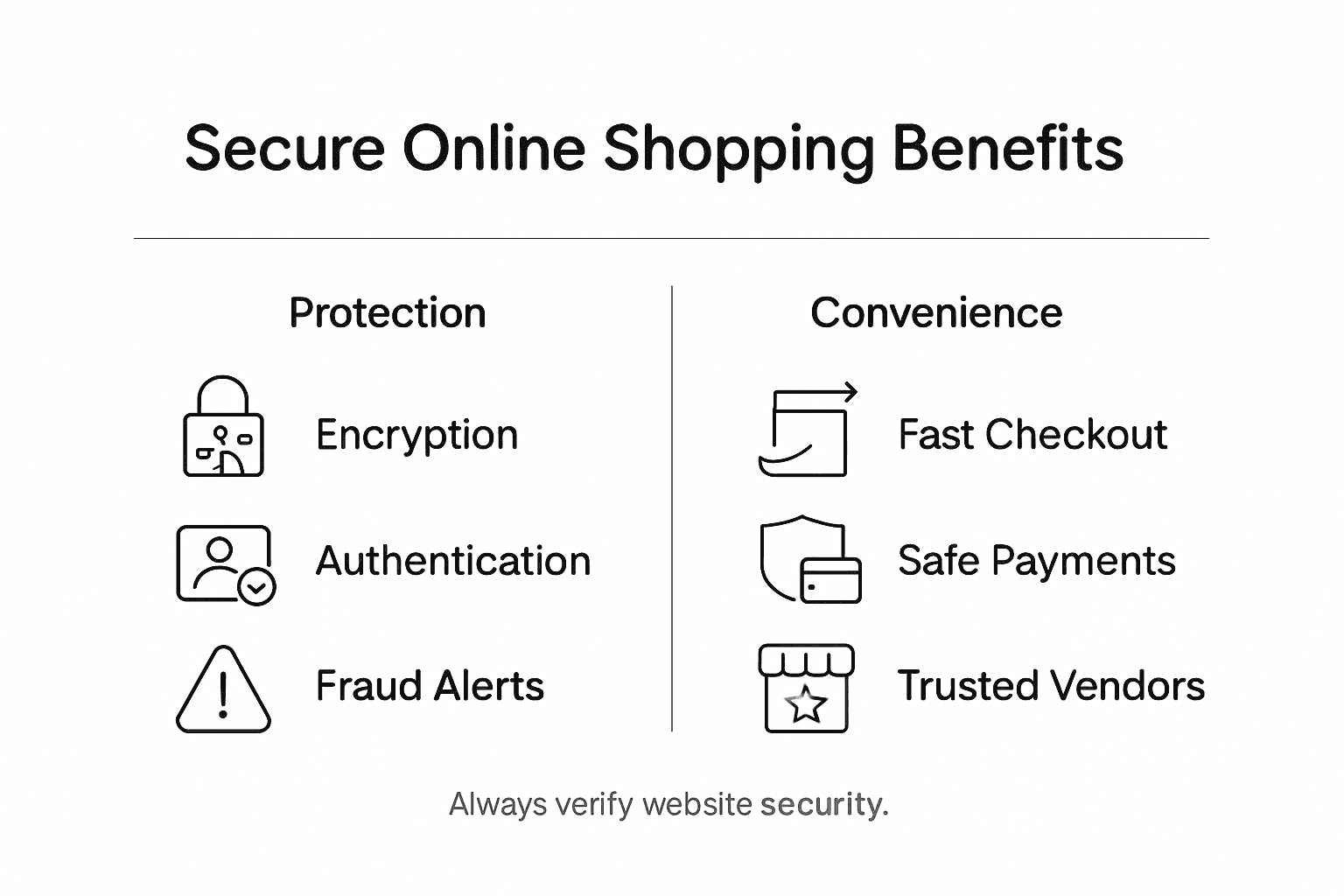
Pro tip: Always check for the “https://” prefix and padlock icon in your browser before entering any payment information to ensure a secure connection.
Popular Security Types and Key Features
Information security represents a comprehensive approach to protecting digital assets and personal data during online transactions. For homeowners engaging in internet shopping, understanding the various security mechanisms is crucial for maintaining financial safety and personal privacy.
Information security encompasses multiple protective strategies designed to safeguard sensitive data across digital platforms. These strategies include encryption, access controls, authentication systems, and continuous monitoring to prevent unauthorized access and potential cyber threats.
Key security types in online shopping environments include:
- Encryption: Transforms data into unreadable code during transmission
- Authentication: Verifies user and seller identities through multiple checkpoints
- Access Control: Restricts system entry to authorized users only
- Data Integrity Checks: Prevents unauthorized data modifications
- Secure Key Management: Protects cryptographic protocols
Security mechanisms work collectively to create multiple defensive layers, ensuring that personal and financial information remains protected throughout digital transactions. These integrated systems validate credentials, encrypt sensitive data, and monitor potential security risks in real time.
Pro tip: Enable two-factor authentication on all online shopping accounts to add an extra layer of protection beyond standard password security.
Trusted Payments and Consumer Data Protection
Digital payment security has become a critical concern for homeowners navigating online shopping landscapes, with sophisticated protection mechanisms designed to safeguard financial transactions and personal information against emerging cyber threats.

Global data protection laws establish comprehensive frameworks that mandate strict guidelines for handling consumer financial information. These regulations require companies to implement robust security protocols, ensuring transparent processes for collecting, storing, and managing personal data while providing consumers with critical rights to access and control their personal information.
Key components of trusted payment systems include:
- Encryption of financial transaction data
- Multi-factor authentication processes
- Real-time fraud detection algorithms
- Secure tokenization of payment credentials
- Comprehensive transaction monitoring systems
Regulatory authorities consistently recommend comprehensive risk assessment strategies to protect consumers across digital payment platforms. These strategies focus on preventing unauthorized access, minimizing operational risks, and creating multiple defensive layers that shield personal and financial data from potential breaches.
The following table contrasts digital payment security features to highlight their purpose and benefits:
| Security Feature | Main Purpose | Consumer Benefit |
|---|---|---|
| Encryption | Protects transmitted data | Prevents data theft online |
| Multi-factor authentication | Confirms user identity | Blocks unauthorized access |
| Tokenization | Hides card numbers | Reduces breach exposure |
| Fraud detection | Identifies unusual activity | Stops suspicious transactions |
| Transaction monitoring | Tracks purchases in real time | Enables quick fraud response |
Pro tip: Always use a dedicated credit card with fraud protection for online purchases to limit potential financial exposure and simplify tracking suspicious transactions.
Fraud, Scams, and Buyer Protection Rights
Online shopping fraud represents a significant threat to homeowners, with sophisticated scammers constantly developing new strategies to exploit digital consumers. Understanding the landscape of potential risks is the first critical step in protecting personal and financial information during internet transactions.
Federal consumer protection guidelines offer comprehensive advice for identifying and preventing online shopping scams. These recommendations emphasize vigilance, including careful monitoring of financial transactions, verifying seller credentials, and maintaining skepticism toward unusually attractive offers that seem too good to be true.
Common online shopping fraud tactics include:
- Phishing websites mimicking legitimate retailers
- Fake product listings with stolen images
- Identity theft through compromised payment systems
- Undelivered merchandise scams
- Counterfeit product sales
- Unauthorized recurring charges
State attorneys general play a crucial role in protecting consumers by providing dispute resolution services, enforcing consumer protection laws, and offering resources for reporting fraudulent activities. These legal professionals serve as a critical support system for homeowners navigating complex online shopping environments and seeking remedies for potential fraudulent transactions.
Pro tip: Screenshot all transaction details and communications with online sellers, and use credit cards with strong fraud protection for maximum financial security.
Risks, Costs, and Common Shopping Pitfalls
Online shopping vulnerabilities extend far beyond simple transaction risks, presenting complex challenges that demand strategic consumer awareness and proactive protection strategies. Homeowners navigating digital marketplaces must develop sophisticated understanding of potential financial and personal security threats.
Common online shopping risks encompass multiple sophisticated threats that can compromise personal financial security. These vulnerabilities include fraudulent seller platforms, unsecured payment mechanisms, potential identity theft scenarios, and the substantial risk of receiving counterfeit or misrepresented products that fail to meet advertised specifications.
Key financial and security pitfalls include:
- Purchasing from unverified sellers
- Failing to verify website security certificates
- Ignoring transaction documentation
- Shopping on unsecured public networks
- Overlooking hidden shipping and return costs
- Providing excessive personal information
Deceptive marketing tactics can significantly impact consumer financial outcomes through sophisticated price manipulation strategies. These techniques may include dynamic pricing based on personal data profiles, strategic product placement designed to encourage impulse purchases, and complex discount structures that obscure true product value and potential additional expenses.
Here is a summary of common online shopping risks and strategies to counter them:
| Risk Type | Potential Impact | Mitigation Strategy |
|---|---|---|
| Unverified sellers | Loss of money, no recourse | Research vendor reputation |
| Unsecured connections | Data intercepted by attackers | Use only HTTPS websites |
| Excessive personal details | Identity theft risk | Share only required information |
| Dynamic pricing | Overpaying for products | Compare prices across sites |
| Counterfeit goods | Receiving fake products | Verify product authenticity |
| Public Wi-Fi use | Payment details stolen | Shop only on private networks |
Pro tip: Create a dedicated email address for online shopping and use virtual credit card numbers to limit potential financial exposure and track digital transactions more effectively.
Experience Safe and Stylish Shopping for Your Home
The article highlights the importance of secure online shopping for homeowners who want to protect their personal and financial information while buying essentials and smart solutions for their homes. At https://mhdsells.shop, we understand your need for trusted payment security and data protection when updating your living space. Our platform offers encrypted payment methods and verified products, ensuring your purchases—from cleaning essentials to smart home gadgets—are safe and reliable.
Shopping with confidence has never been easier. Benefit from fast delivery, free shipping on all orders, and a carefully curated selection designed to enhance your home’s comfort and style. Explore our collection and enjoy peace of mind knowing your transaction is protected by robust security measures referenced in the article.
Discover secure and convenient home solutions today. Visit Our Home Accessories Collection to start transforming your space safely.

Protect your home and your personal data now by choosing MHD Sells as your trusted partner for secure online shopping and quality home products. Shop smart. Shop secure. Shop now.
Frequently Asked Questions
What are the key components of secure online shopping?
Key components of secure online shopping include verifying website authenticity, using encrypted payment gateways, purchasing from reputable vendors, monitoring transaction histories, and implementing robust password protection.
How does encryption protect my personal information during online shopping?
Encryption transforms your data into unreadable code during transmission, preventing unauthorized individuals from accessing sensitive information such as credit card details and home addresses.
What is multi-factor authentication, and why is it important for online shopping?
Multi-factor authentication is a security measure that requires users to provide two or more verification factors to gain access. It adds an extra layer of protection beyond just a password, significantly reducing the risk of unauthorized access to your accounts.
How can I identify and avoid online shopping scams?
To identify and avoid scams, carefully verify seller credentials, scrutinize website security features, monitor your transactions for unusual activity, and always be skeptical of offers that appear too good to be true.
Recommended
7 Steps to an Effective Home Cleaning Checklist for All
Guide to Setting Up Kitchen Essentials for Easy Cooking
Related Posts

Guide to Setting Up Kitchen Essentials for Easy Cooking

7 Steps to an Effective Home Cleaning Checklist for All

Why Use Kitchen Gadgets – Making Cooking Easier

Top 7 Smart Cleaning Accessories Every Modern Home Needs in 2025


1 Comment
Very Nice Blog