

Guide to Setting Up Kitchen Essentials for Easy Cooking
Finding stylish and practical kitchen essentials can be an exciting challenge for new American homeowners surrounded by the energy of Los Angeles or New York. In cities where every square foot counts, even a small kitchen must deliver top function without sacrificing style. Studies show more than 60 percent of American first-time homeowners want a layout that feels personalized yet clutter-free. Discover how the right approach helps you transform any cooking space into an inviting, efficient hub for daily life and entertaining.
Table of Contents
- Step 1: Assess Your Kitchen Layout and Needs
- Step 2: Select Core Cooking Tools and Appliances
- Step 3: Organize Storage for Maximum Efficiency
- Step 4: Arrange Countertops for Accessibility
- Step 5: Verify Functionality and Aesthetic Harmony
Quick Summary
| Key Point | Explanation |
|---|---|
| 1. Assess Your Kitchen Layout | Measure your kitchen and employ the kitchen work triangle for an efficient layout that enhances workflow and reduces cooking stress. |
| 2. Choose Versatile Tools and Appliances | Select core appliances and multi-functional tools to streamline meal preparation and maximize the efficiency of your cooking space. |
| 3. Organize Storage Effectively | Implement strategic storage solutions that designate zones for different items, improving accessibility and reducing clutter in your kitchen. |
| 4. Design Countertops for Accessibility | Arrange countertops and work zones for maximum usability, considering ergonomics and ease of movement during meal preparation. |
| 5. Ensure Functional Aesthetic Harmony | Evaluate how kitchen elements work together visually and functionally to achieve a cohesive design that meets your cooking needs. |
Step 1: Assess Your Kitchen Layout and Needs
Designing an efficient kitchen starts with understanding your unique space and cooking requirements. The key is creating a functional environment that supports your culinary style while maximizing every square inch of available area.
Begin by measuring your kitchen dimensions precisely and mapping out your current appliance locations. The kitchen work triangle concept recommends positioning your stove, refrigerator, and sink in a strategic arrangement that minimizes unnecessary movement. This principle helps create a workflow that reduces cooking stress and increases efficiency. Consider the distance between these key areas professional kitchen designers recommend: no leg of the triangle should be less than 4 feet or more than 9 feet, with the total triangle distance staying between 13 and 26 feet.
Analyze your cooking habits and personal preferences to customize your kitchen layout. Do you prefer open spaces for entertaining? Need extra counter space for meal preparation? Are you a baker who requires specific storage for baking tools? These questions will guide your design choices and help you create a personalized cooking environment that truly works for you.
Here is a quick comparison of popular kitchen layout styles and their pros and cons:
| Layout Type | Main Benefit | Potential Drawback |
|---|---|---|
| U-Shaped | Maximizes counter space | Can feel enclosed |
| L-Shaped | Good for open floor plans | Limited storage options |
| Galley | Efficient for cooking | Narrow, less social space |
| Island | Excellent for entertaining | Requires large room |
Pro tip: Take photographs of your current kitchen layout and sketch potential modifications to visualize improvements before making any permanent changes.
Step 2: Select Core Cooking Tools and Appliances
Building a functional kitchen means selecting the right tools and appliances that will support your cooking style and make meal preparation efficient and enjoyable. Your goal is to create a versatile cooking space equipped with essential items that can handle a wide range of culinary tasks.
Start by focusing on core appliances that form the backbone of your kitchen. Energy efficient appliances offer significant advantages in performance and long term cost savings. Consider an induction stove which provides precise temperature control and faster heating compared to traditional gas or electric models. Your refrigerator should have adequate storage capacity and energy star ratings, while a quality dishwasher can save time and water. For small appliances, prioritize multipurpose tools like a food processor, blender, and stand mixer that can handle multiple cooking techniques.
When selecting your kitchen tools, think about versatility and durability. The comprehensive list of food preparation utensils suggests investing in high quality basics like sharp chef knives, sturdy cutting boards, measuring cups, mixing bowls, and a good set of cookware that can transition from stovetop to oven. Look for materials that conduct heat evenly and resist wear such as stainless steel, cast iron, and ceramic.

Pro tip: Invest in multi functional kitchen tools that can perform several tasks to maximize your kitchen space and reduce clutter.
Step 3: Organize Storage for Maximum Efficiency
Transforming your kitchen into a highly functional space requires strategic storage solutions that maximize every inch of available space while keeping your tools and ingredients easily accessible. The right organization system can dramatically improve your cooking experience and reduce daily kitchen stress.
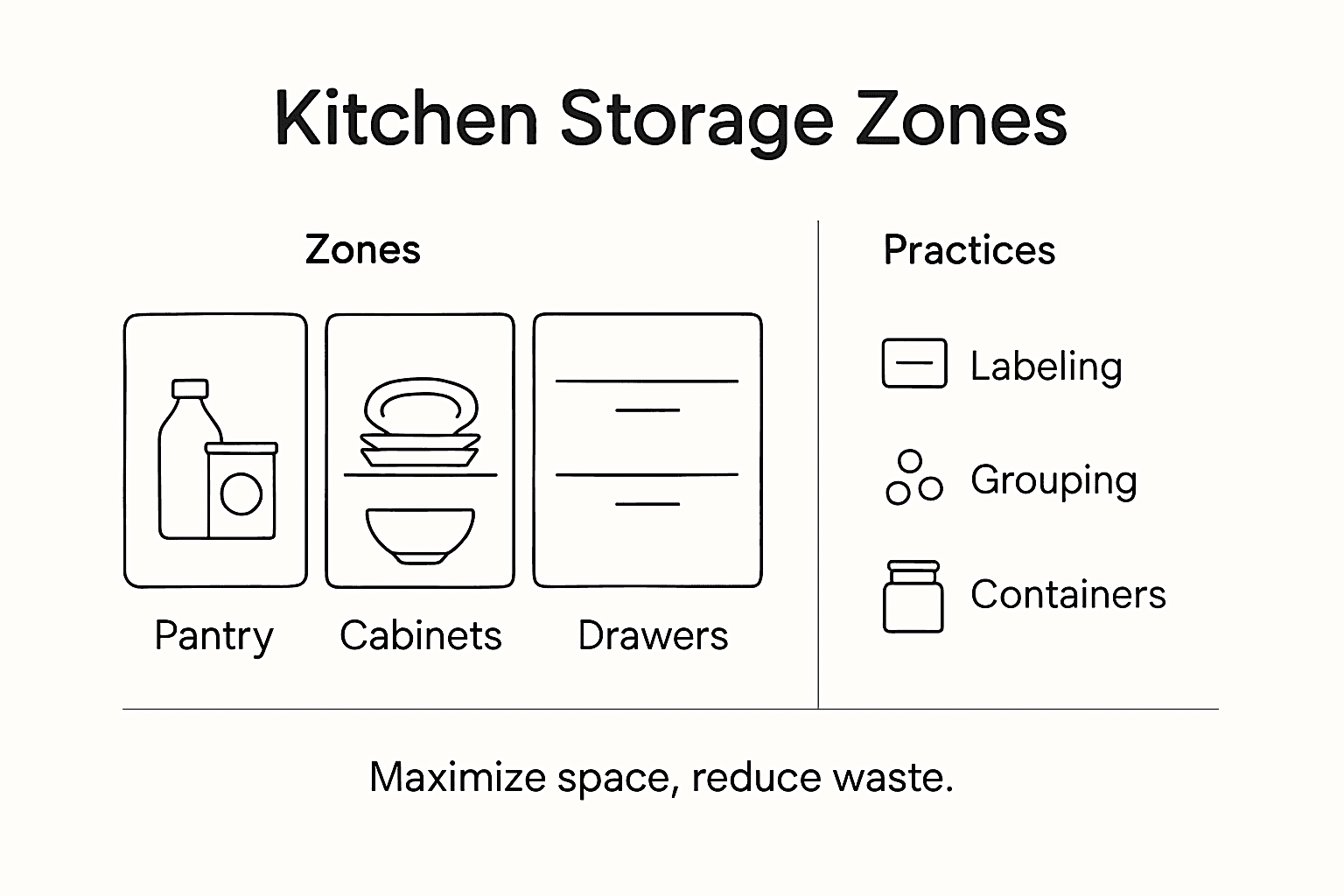
Start by implementing the comprehensive kitchen storage recommendations from professional kitchen designers. Prioritize creating designated zones for different types of items storing dry goods, cooking tools, bakeware, and small appliances in their own strategic locations. Consider installing pull-out shelves in lower cabinets, vertical dividers for baking sheets and cutting boards, and drawer organizers that keep utensils neatly separated. Utilize the insides of cabinet doors for hanging measuring cups or mounting magnetic knife strips to free up counter space.
Focus on safe and efficient food storage practices that keep your ingredients fresh and your kitchen organized. Safe food storage techniques recommend using clear airtight containers for pantry items, labeling everything with purchase or expiration dates, and arranging items so older ingredients are used first. Group similar items together refrigerate meats on the bottom shelf to prevent cross contamination, store fruits and vegetables in designated crisper drawers, and keep frequently used condiments at eye level for quick access.
The following table summarizes best practices for organizing kitchen storage zones:
| Storage Zone | Key Practices | Common Mistakes |
|---|---|---|
| Pantry | Use clear labeled containers | Storing expired items |
| Drawers | Divider trays for utensils | Overcrowding drawers |
| Cabinets | Pull-out shelves, adjust heights | Ignoring vertical space |
| Fridge/Freezer | Group items by type/expiration date | Not rotating stock |
Pro tip: Invest in stackable clear containers with airtight seals to maximize vertical storage space and keep ingredients visible and fresh.
Step 4: Arrange Countertops for Accessibility
Creating a kitchen that works for everyone means designing countertops that are functional, comfortable, and easy to use regardless of your height, mobility, or cooking style. Your goal is to develop a workspace that supports effortless meal preparation and feels intuitive from the moment you start cooking.
Apply kitchen design guidelines that prioritize accessibility and ergonomics. Standard countertop height typically ranges between 36 and 42 inches, but consider your personal height and cooking preferences when determining the ideal workspace. For those with mobility challenges, lower sections or adjustable countertops can provide better reach and comfort. Create multiple work zones with clear floor space that allows easy movement between preparation areas. Keep frequently used items within arm’s reach and consider installing pull out cutting boards or sliding shelves that minimize stretching or bending.
Carefully plan your countertop clearance and spatial arrangements to ensure maximum usability. Leave adequate knee and toe space for wheelchair users, maintain at least 30 inches of clear floor space in front of work areas, and position appliances and storage to minimize unnecessary movement. Incorporate features like rounded counter edges to prevent injuries, install task lighting to improve visibility, and use contrasting colors between countertops and surfaces to help individuals with visual impairments navigate more easily.
Pro tip: Test your kitchen layout by moving around the space with different mobility tools to identify potential accessibility challenges before finalizing your design.
Step 5: Verify Functionality and Aesthetic Harmony
Transitioning from individual kitchen elements to a cohesive design requires carefully evaluating how your chosen components work together both practically and visually. Your ultimate goal is creating a space that feels effortless to use while reflecting your personal style and culinary needs.
Apply the comprehensive kitchen design principles that balance functionality with visual appeal. Examine your kitchen layout critically by walking through potential cooking scenarios. Check that your workflow feels natural small appliances should be easily accessible, cooking zones should have logical proximity, and your most frequently used tools should require minimal movement. Consider the visual relationships between materials color palettes and textures ensuring that countertops backsplashes and cabinetry create a harmonious visual narrative without sacrificing practical performance.
Draw inspiration from design innovations like the Frankfurt Kitchen, which revolutionized kitchen design by proving that efficiency and beauty can coexist seamlessly. Pay attention to sightlines and how different areas of your kitchen interact visually. Ensure that open spaces feel connected yet distinct and that storage solutions blend functionality with aesthetic consistency. Test the ergonomics of your design by simulating cooking tasks and noting any awkward movements or inconvenient placements that might disrupt your cooking experience.
Pro tip: Take photographs of your kitchen layout and review them objectively as if you were seeing someone else’s space to identify potential improvements more effectively.
Elevate Your Kitchen Setup with Smart Essentials from MHD SELL
Creating a kitchen that truly supports your cooking style and organization goals can feel overwhelming. The article highlights key challenges such as optimizing your kitchen layout, selecting versatile appliances, and arranging countertops for easy accessibility. Whether you struggle with cramped spaces, inefficient storage, or finding the right tools for your culinary needs, MHD SELL understands the importance of blending functionality with style.
Explore our curated collection of kitchen appliances designed to enhance your cooking efficiency and bring modern solutions into your home. From reliable small electronic appliances to thoughtfully designed kitchen tools, you will find products aimed to simplify your meal preparation while saving space.

Ready to transform your kitchen into a stylish and functional haven? Visit MHD SELL today for fast delivery, secure payment options, and exclusive deals that help you build the kitchen essentials you deserve. Don’t wait — start upgrading your cooking space now with smart choices that make every meal easier.
Frequently Asked Questions
How do I assess my kitchen layout for easy cooking?
To assess your kitchen layout, start by measuring your kitchen dimensions and noting current appliance locations. Create a work triangle with the stove, refrigerator, and sink to minimize unnecessary movement and enhance workflow.
What are the essential cooking tools I should include in my kitchen?
Include core appliances like an energy-efficient stove, refrigerator, and dishwasher, as well as versatile small appliances like a food processor and mixer. Prioritize high-quality basics such as chef knives, cutting boards, and a sturdy set of cookware to handle various cooking needs.
How can I organize my kitchen storage for maximum efficiency?
Organize your kitchen by creating designated zones for different items, using clear, labeled containers for pantry goods, and implementing pull-out shelves for easy access. Aim for a tidy arrangement so that frequently used tools are within arm’s reach, reducing kitchen clutter and stress.
What countertop arrangements work best for different cooking styles?
Design countertops by considering your cooking style and height to ensure accessibility and comfort. Incorporate multiple work zones, and keep essential items close by, making meal preparation intuitive and efficient.
How do I ensure my kitchen design is both functional and visually appealing?
To achieve a harmonious kitchen design, critically evaluate the layout by simulating cooking tasks and checking for ease of movement. Ensure that materials and colors complement each other, creating an inviting space without compromising practical performance.
Recommended
Related Posts

Benefits of Secure Online Shopping for Homeowners

7 Steps to an Effective Home Cleaning Checklist for All

Why Use Kitchen Gadgets – Making Cooking Easier

Top 7 Smart Cleaning Accessories Every Modern Home Needs in 2025

